
RFID Cards
Contactless cards read by holding them near a reader, printed or plain.
- Frequency
- 125 kHz or 13.56 MHz
- Chip
- Proximity (EM4100, TK4100), Mifare Classic 1K and 4K, NFC
- Read range
- 3 - 10 cm
- Size
- 85.6 x 54 mm (CR80)
Made to order. Priced by quantity and specification.
About this product
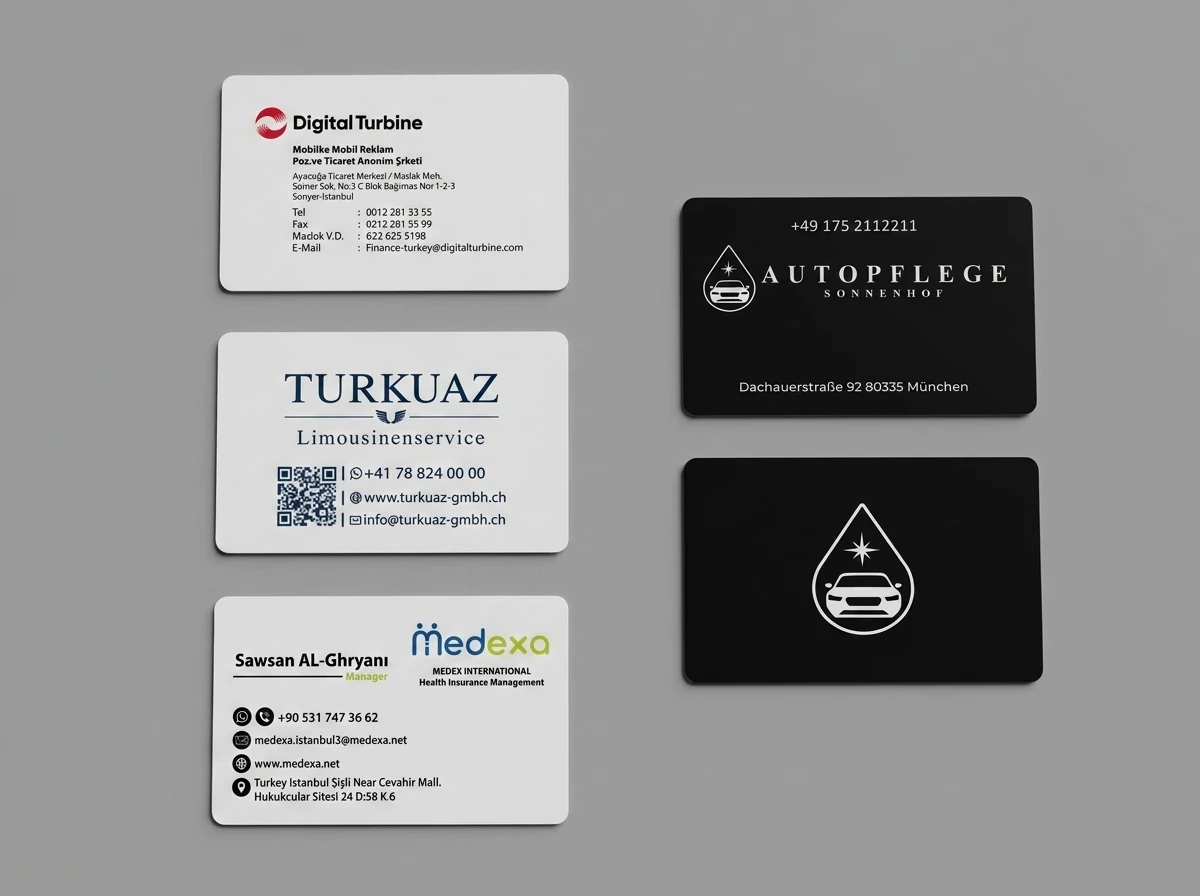
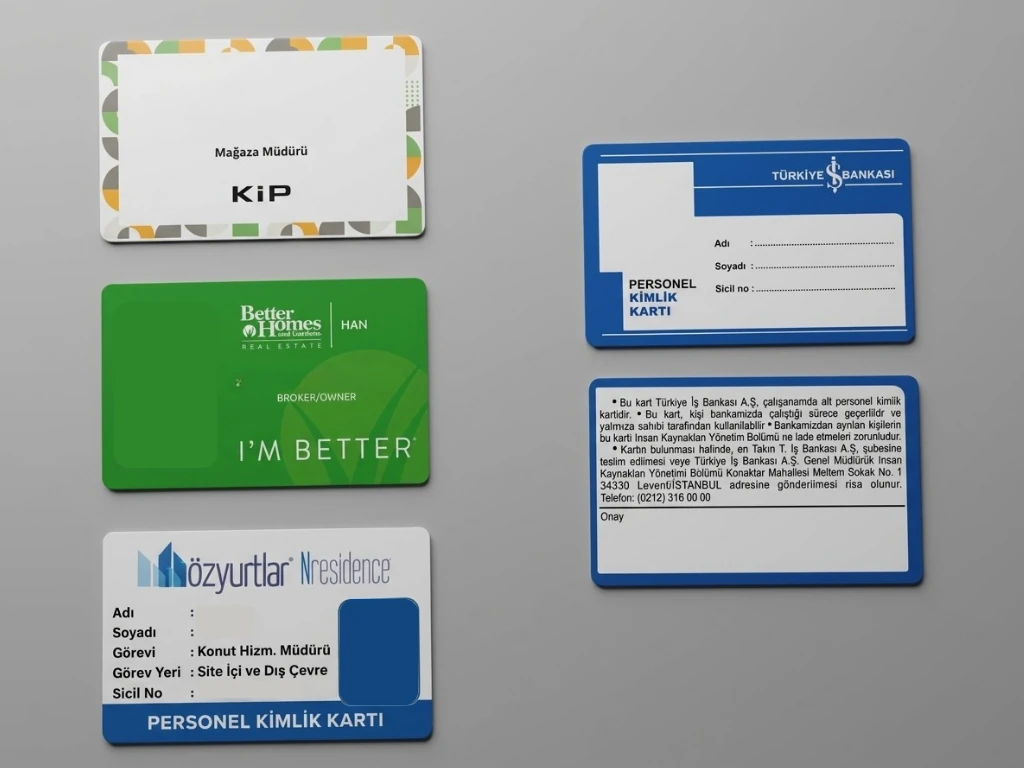
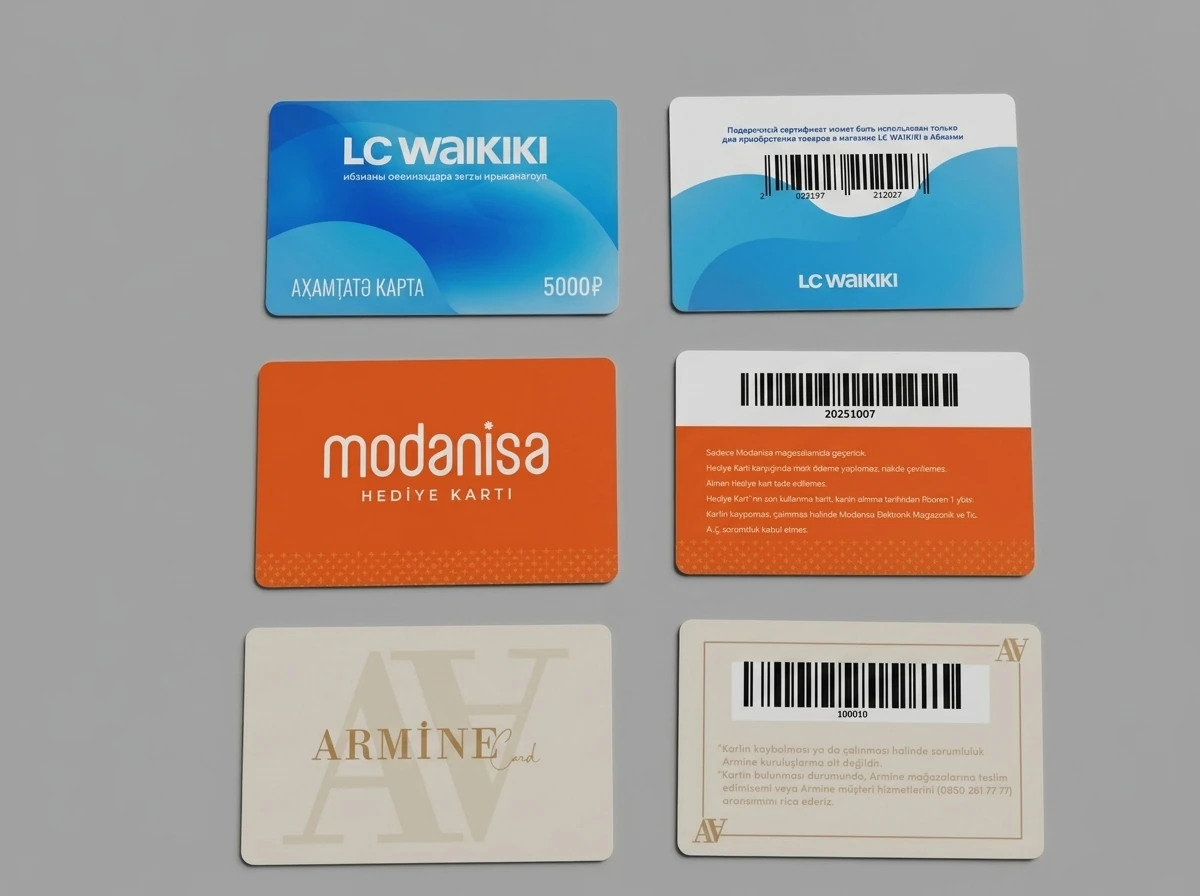
Works with access-control, turnstile, parking, and cafeteria systems. Proximity only verifies identity; Mifare can also store balance and authorization data on the card itself. NFC cards run on the same 13.56 MHz band and can be read by a smartphone without a separate reader, which is why they're preferred for uses like digital business cards and menus. All three can be produced with edge-to-edge printing to match your corporate identity.
Types
- Proximity 125 kHz
- EM4100-compatible, the classic access-control standard
- Mifare Classic 1K / 4K
- 1 KB or 4 KB of memory, carries balance and authorization data
- NFC
- 13.56 MHz, also readable by smartphone; carries a link or information
Where it is used
- Building access control
- Turnstiles
- Cafeterias
- Parking
- Residential entry
Options
- Edge-to-edge printing
- UID or card number printing
- Sector encoding
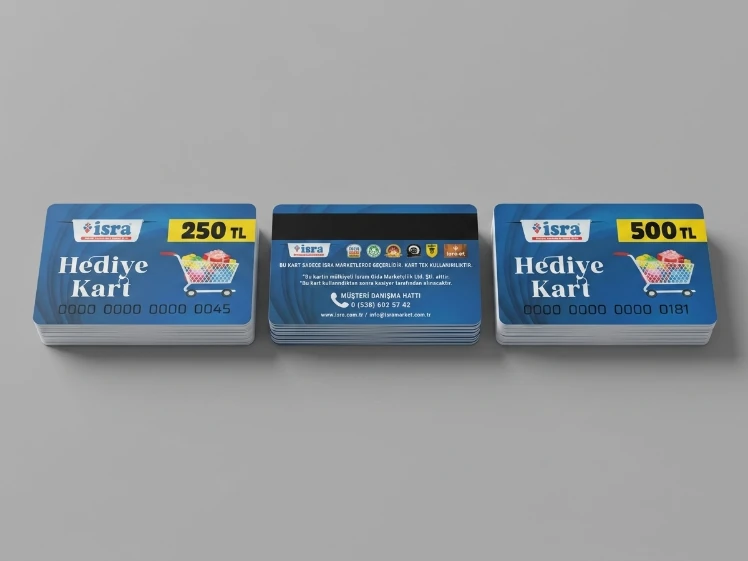
- Adding a magnetic stripe
- Hole punching
- Frequency
- 125 kHz or 13.56 MHz
- Chip
- Proximity (EM4100, TK4100), Mifare Classic 1K and 4K, NFC
- Read range
- 3 - 10 cm
- Size
- 85.6 x 54 mm (CR80)
- Thickness
- 760 microns
- Minimum quantity
- 10 and multiples
Not sure which one?
Tell us where you'll use it and we'll recommend the right material and thickness.
- 01
Send your artwork
Send us your vector artwork. If you don't have one, we'll design the card for you.
- 02
Proof and approval
We prepare a print proof. Color, cut and text placement are sent for your approval.
- 03
Production
The approved file goes to our offset or thermal retransfer line. Lamination and cutting happen at the same facility.
- 04
Inspection and shipping
Every batch is checked by eye and by measurement, then shipped.
Frequently asked questions
Frequently asked questions about RFID Cards. If you don't find your question here, you can call us.
What's the difference between Proximity and Mifare?
Proximity (125 kHz) only reads out the card's identity — no data is stored on it. Mifare (13.56 MHz) has encrypted memory, so balance, authorization, and sector data can be held on the card itself. Cafeteria and balance-based systems need Mifare.
Will it work with my existing turnstile system?
Tell us your system's frequency and chip type and we'll pick a compatible card. If you're not sure, send us a sample of your current card — we'll read it and produce a match.
Can a contactless card be printed on?
Yes, edge-to-edge printing is available. The card number or UID can also be printed on the card, so a lost card can be matched up physically as well.
What is an NFC card used for?
An NFC card runs on the 13.56 MHz band and can be tapped against a smartphone without a separate reader. Content like a digital business card, a menu, a promotion page, or WiFi details can be loaded onto the card and shared with a single tap.