

Card printing methods: offset, digital and thermal
Three methods, three different jobs. Which one makes sense at which quantity, and where the difference in quality actually comes from.
August 14, 2026 · 4 min read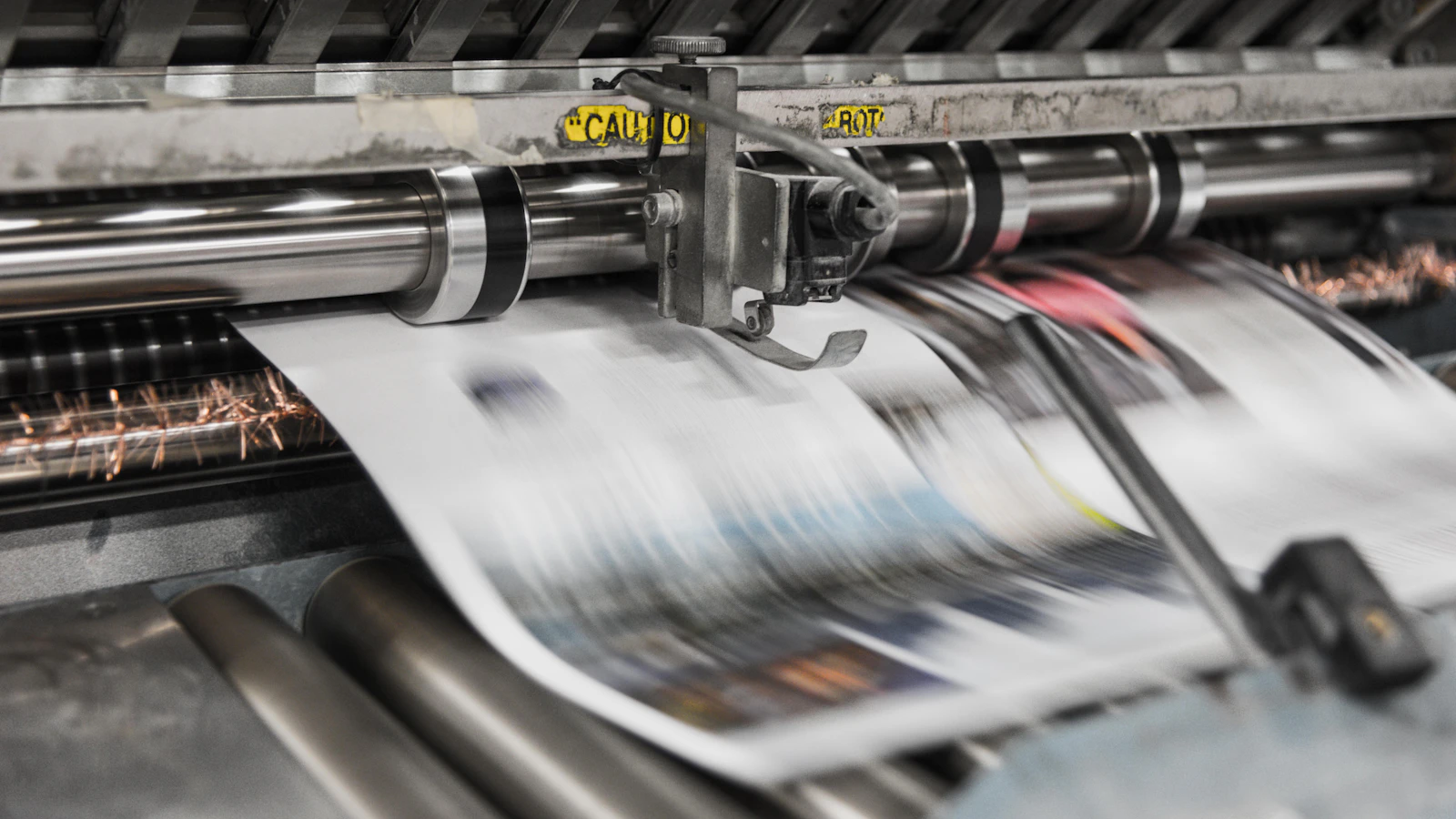
No single method fits every job
There are three main printing methods used in plastic card production, and the difference between them is not quality, it is fit. A ten-card job does not go on an offset line; a fifty-thousand-card job attempted on a thermal printer would take days.
We pick the right line for the quantity. We have written out what each method does below, because knowing it makes it easier to see what you are paying for when you read a quote.
Offset printing
In offset the design is first transferred to a metal plate, and the plate presses ink onto a PVC sheet through a cylinder. One sheet holds a large number of cards; once printed, the sheet is laminated and the cards are cut out one by one.
Plate preparation is a fixed cost. That makes offset expensive at low quantities and unbeatable at high ones: once the plate is made, a thousand cards and ten thousand cards print at nearly the same speed.
This is the method with the highest color saturation and the best full-bleed print quality. Pantone printing is also only possible here.
Thermal retransfer
A thermal retransfer printer prints the design onto a thin film first, then transfers the film onto the card surface with heat and pressure. Cards are printed one at a time, and there is no plate.
With no setup cost, this is the most economical method at low quantities — it is the line that makes a ten-card order possible. Because every card is printed separately, putting a different name, photo or number on each one takes no extra step.
It prints edge to edge, and it works on cards with chips and magnetic stripes as well.
Digital printing
Digital printing can be thought of as offset without the plate: the design goes straight onto the sheet. It is chosen at mid-range quantities to avoid offset's plate cost.
It falls slightly behind offset on color saturation, but setup time is short — and on a rush job that difference can be the deciding one.
The three side by side
The table below is a rough guide. The actual choice depends on what the job involves: variable data, a chip, a custom size or a Pantone requirement can all move it.
- Offset
- High quantity, best color, Pantone possible
- Digital
- Mid quantity, fast setup, no plate
- Thermal retransfer
- Low quantity, variable data per card
Which method at which quantity
In practice it breaks down as follows. These thresholds are not hard lines; they shift with what the job involves.
- 10 - 250 cards: thermal retransfer. No plate cost, and personalization is free.
- 250 - 1,000 cards: digital or thermal. The complexity of the design decides.
- 1,000 cards and up: offset. Divided across the quantity, the plate cost brings the unit price down noticeably.
Variable data printing
When every card has to carry different information — an employee name, a membership number, a barcode, a QR code — that is variable data printing. The design is prepared once, and the changing fields are fed from a list.
It works on high-volume jobs too: the body is printed on offset, and the variable field is added to the card in a separate pass. So "ten thousand cards, each with a different number" is not a contradiction.
After printing: lamination and finishing
What lets a card survive years in a wallet is not the printing, it is the protective layer that goes over it. Lamination can be matte or gloss; a matte surface does not hold fingerprints; a gloss surface makes the color look more vivid.
Spot varnish, foil stamping and embossing are added at this stage. Rounded-corner cutting, hole punching and the signature panel happen on the same line.
Every card goes through these stages no matter which method printed it — meaning the printing method determines how the card looks and what it costs per unit, not how long it lasts.
Products covered in this article
Tell us the quantity and what goes on the card, and we'll have a price back to you the same day.
Frequently asked questions
The questions we get asked most about this topic.
Does quality drop if I order a small quantity?
No. Low-quantity jobs are printed on the thermal retransfer line, and that line also prints edge to edge, with the same lamination applied afterwards. The only thing that changes is the unit cost; quality and durability are identical.
Why is the minimum quantity not higher for offset printing?
Our minimums depend on the size of the card, not on the printing method. Standard-size cards are produced in multiples of 10, and a low-quantity job is routed to the line that suits it. We choose the method; you tell us the quantity and what goes on the card.
We have a Pantone color — can it be printed exactly?
On the offset line, yes: the Pantone color can be printed directly. On low-quantity jobs we match it to the closest CMYK equivalent; for most colors the difference is not something the eye can pick out, and where it is critical you see it at the proofing stage.
Which method is used for chip cards?
All of them work. A contactless chip is embedded inside the body, so it places no constraint on the surface. With a contact chip or a magnetic stripe those areas have to be left unprinted; that constraint is independent of the printing method and the same on every line.